Gruta de Huagapo
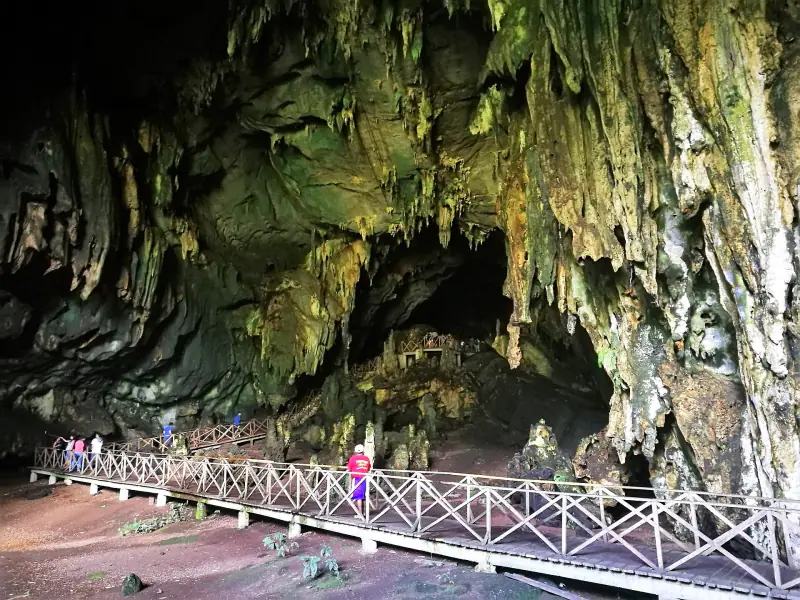
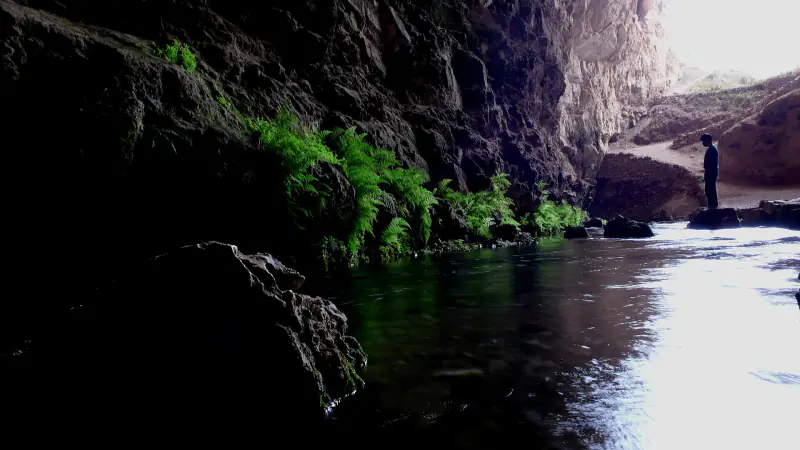
A limestone cave at about 3,500 metres near Palcamayo. A stream flows out of its entrance.
The cave that weeps
Huagapo opens as a tall arch in a limestone cliff above the Shaka valley. Water runs out of it all year, and the name refers to this.
Peruvian and foreign expeditions have explored the cave since the 1960s. Beyond the entrance halls the passage is partly flooded, and divers have passed several sumps. For a long time it was described as the deepest cave in South America, though deeper caves have since been found.
Gruta de Huagapo at a glance
- Location
- Palcamayo district, Tarma province, Junín
- Altitude
- about 3,500 m
- Rock
- limestone
- Explored length
- more than 2 km
- Visitor section
- the first few hundred metres
- Name
- Quechua, usually translated as 'cave that weeps'
- Nearest town
- Tarma, about 30 km
- Lighting
- torches
The first halls
Local guides lead visitors through the first chambers, which have stalactites and flowstone. Further in, the route needs wading and then caving equipment.
Faint rock paintings can be seen near the entrance.
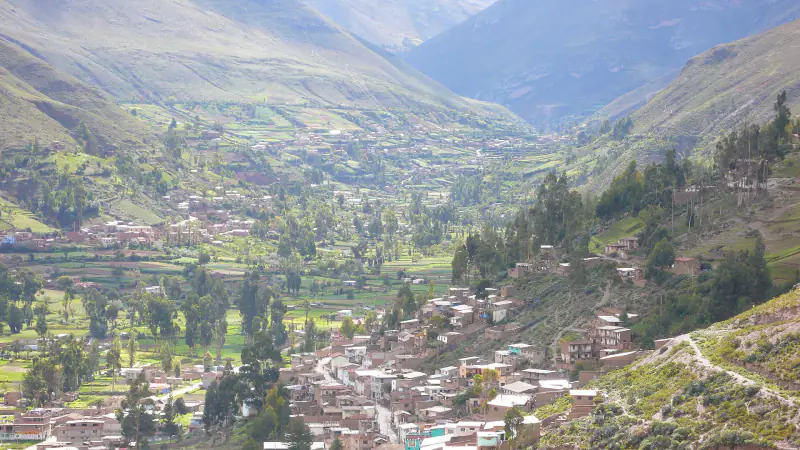
The valley of Tarma
Tarma is known as the 'Pearl of the Andes' for its mild climate and flower fields. The road to Palcamayo continues to San Pedro de Cajas, a village of weavers.
Gruta de Huagapo in figures
Before you go
Getting there
Tarma is about five hours by road from Lima. From Tarma, shared taxis and buses run to Palcamayo, and the cave is a few kilometres beyond.
On the visit
Guides wait at the entrance and lend lamps. Wear warm clothing and shoes that can get wet.
Good to know
The cave is high. Spend a night in Tarma first if you have come straight from the coast.
Opening times, access rules and prices change. Confirm them before you travel: the municipality of Palcamayo.