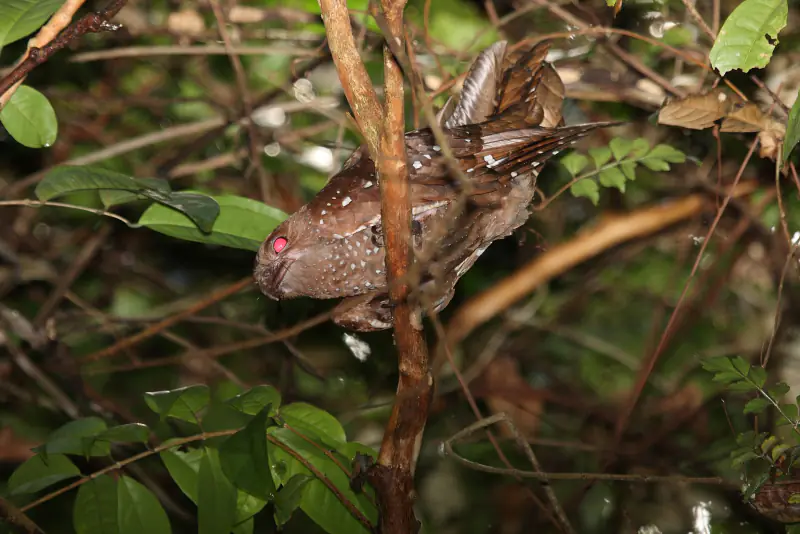
The oilbird
A nocturnal, fruit-eating bird that nests in caves and finds its way by sound.
A bird that echolocates
The oilbird is about the size of a small hawk, with brown plumage spotted with white. It spends the day on ledges deep inside caves and flies out at night to feed on the fruit of palms and laurels.
Inside the cave it makes sharp clicks and listens for the echoes. Unlike the calls of most bats, the clicks are easy for people to hear. Outside, it relies on very sensitive eyes and a good sense of smell.
The oilbird at a glance
- Scientific name
- Steatornis caripensis
- Spanish name
- guácharo
- Length
- about 45 cm
- Wingspan
- about 1 m
- Diet
- fruit, mainly of palms and laurels
- Range
- northern South America and Trinidad
- First described
- 1817, by Alexander von Humboldt
- Where to see it in Peru
- Cueva de las Lechuzas, Cueva de Palestina
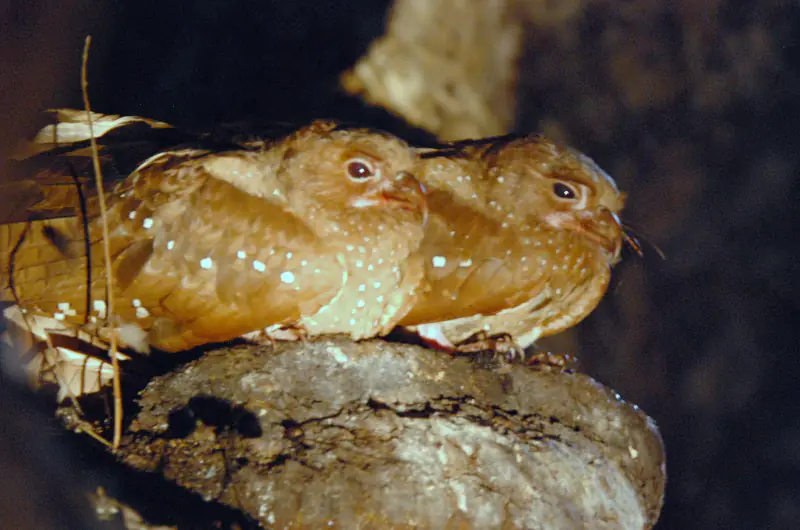
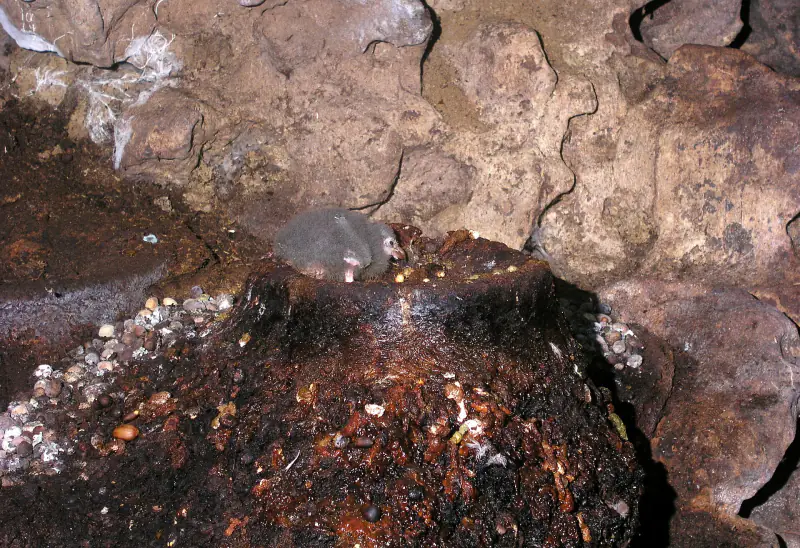
Why oil?
Oilbird chicks are fed on oily fruit and become very fat. In the past people collected them and boiled them down for cooking and lamp oil. The practice is now illegal in protected areas.

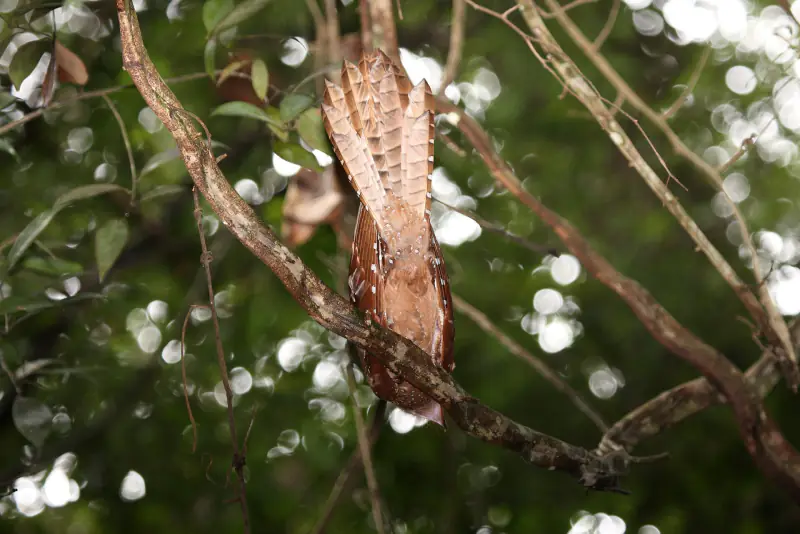
Seeds in the dark
The birds swallow fruit whole and drop the seeds in the cave or over the forest. Seedlings sprout on the cave floor and die for lack of light. Outside, the birds spread seeds over long distances.
In pictures
Select a photograph to enlarge it. Authors and licences are listed in the photo credits.