How caves form
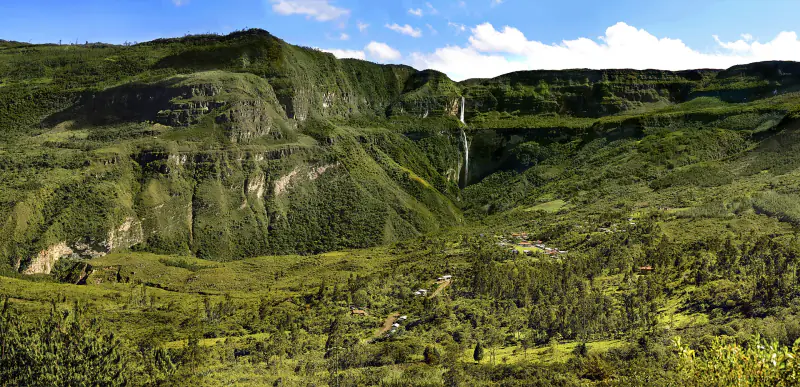
Caves form where slightly acidic water dissolves limestone over a very long time.
How limestone dissolves
Caves are the drainage system of a limestone landscape.
Limestone is made largely of calcium carbonate, which pure water hardly dissolves. Rainwater picks up carbon dioxide from the air and much more from the soil, where roots and microbes produce it. This makes a weak carbonic acid that dissolves limestone slowly.
Water moves down along cracks and along the bedding planes between rock layers. The routes that carry the most water widen fastest and capture more flow. Over tens or hundreds of thousands of years a network of fissures becomes a network of passages.
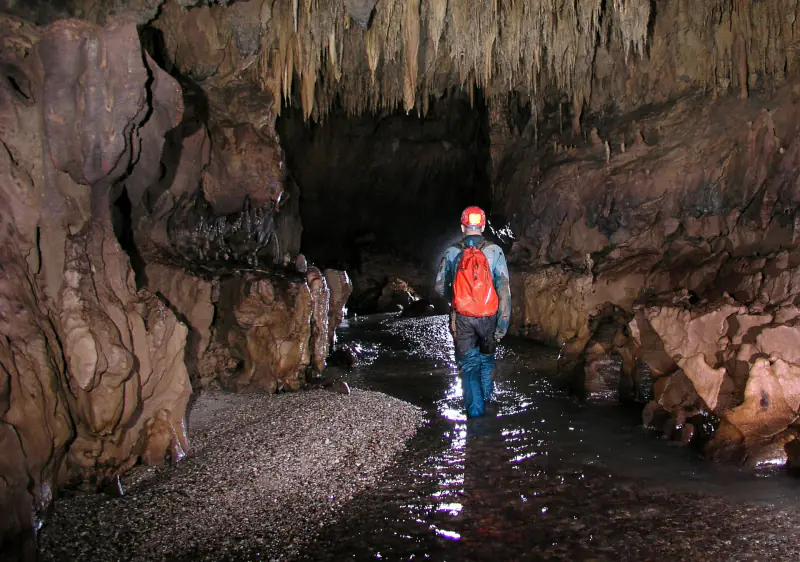
Below the water table, passages are completely flooded and are dissolved on all sides into rounded tubes. Above it, streams have a free surface and cut downwards, leaving tall canyon passages. Many caves show both forms, which records a falling water table.
In Peru the main limestone areas are in the eastern Andes and the cloud forest of Amazonas and San Martín, and on the high plateaus of Junín, Huánuco and Lima.
From crack to chamber
Water goes underground
Streams flowing off impermeable rock reach limestone and sink. Rain soaks in through many small fissures.
Passages enlarge
Acidic water widens the most favourable routes. Flooded tubes form below the water table and canyons above it.
The water moves down
As valleys deepen, the water table falls. Upper passages are left dry and the stream makes a new, lower level.
Dripstone grows
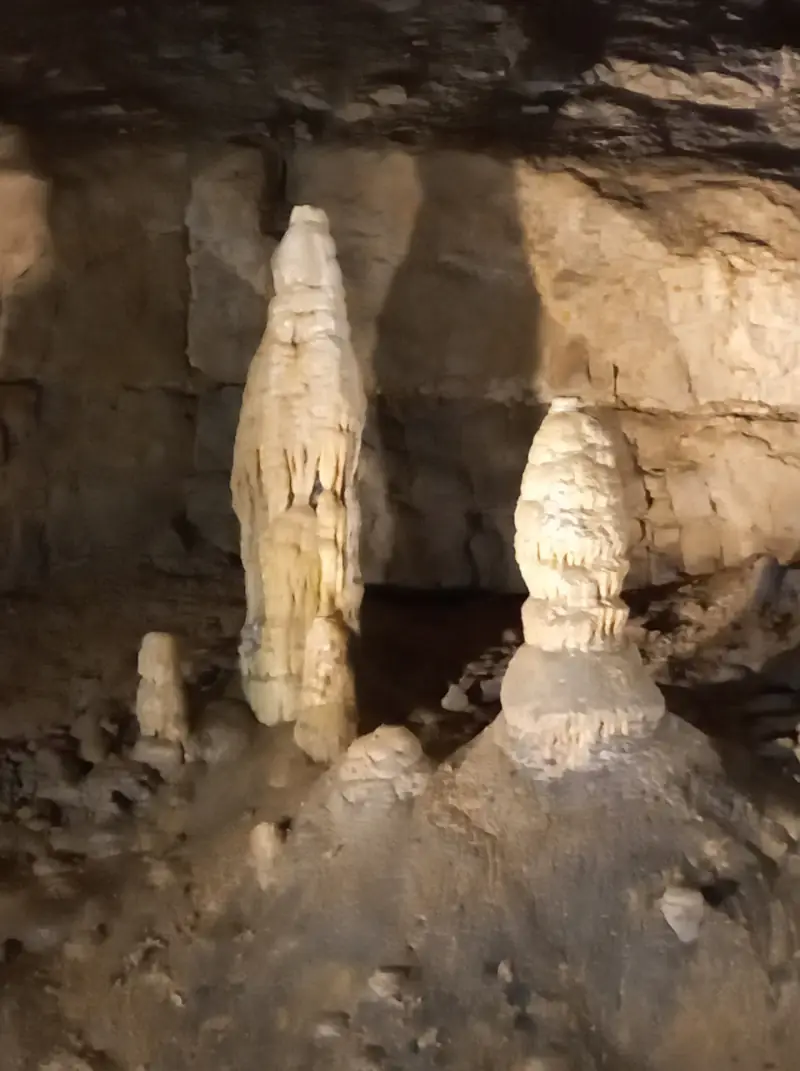
Seepage water entering air-filled passages loses carbon dioxide and deposits calcite as stalactites, stalagmites and flowstone.
Roofs collapse
Unsupported ceilings fall. Underground this produces large halls. Near the surface it opens sinkholes and leaves natural bridges.
The cave is unroofed
In time the surface is lowered until it cuts into the cave and only a line of hollows remains.
How dripstone grows
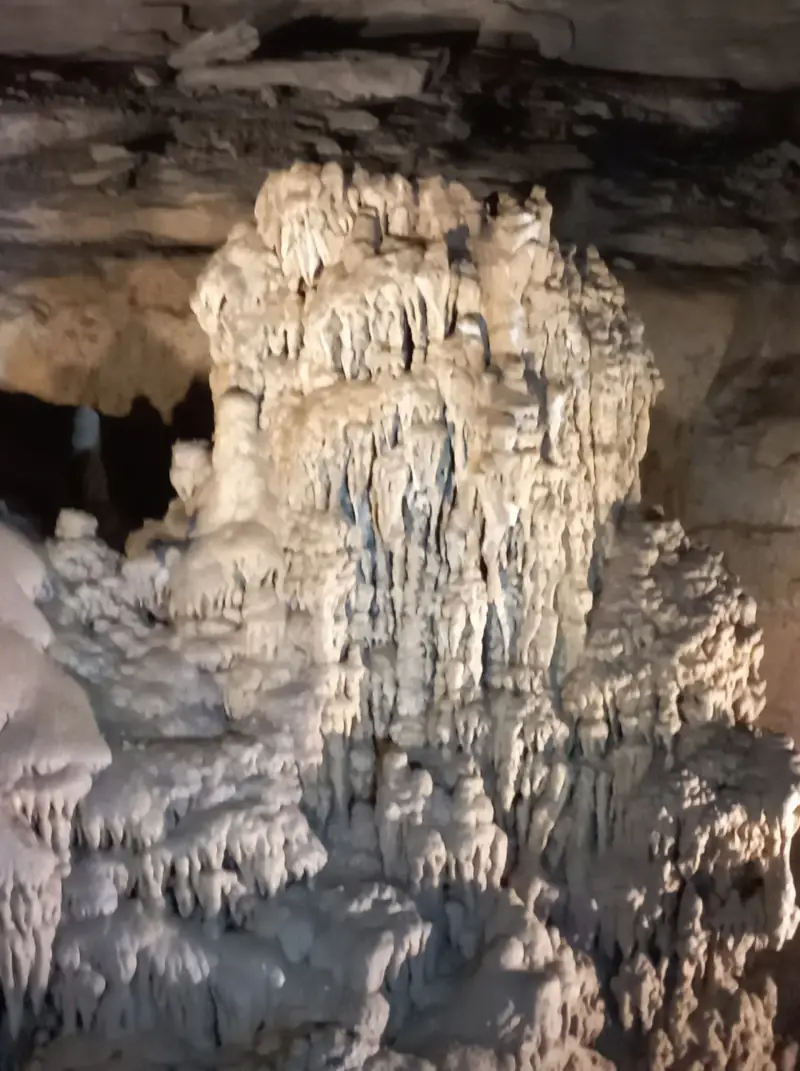
Dripstone forms by the reverse of the process that dissolves the rock. Water seeping through the rock above is rich in dissolved calcium carbonate and carbon dioxide. When a drop enters a ventilated passage, the gas escapes and a trace of calcite is left behind.
On the ceiling this builds a hollow tube, a soda straw, which thickens into a stalactite. Where the drop lands, a stalagmite rises. The two may join as a column. Water flowing in a film lays down sheets of flowstone.
Growth is slow, commonly a few hundredths to a few tenths of a millimetre a year. Touching formations is forbidden because skin oils stop calcite from adhering and leave a permanent stain.
Caves that are not in limestone
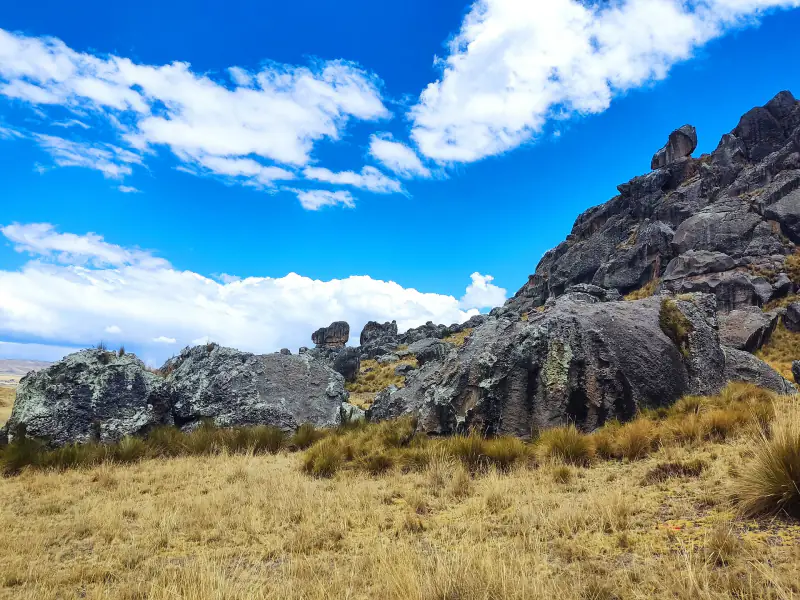
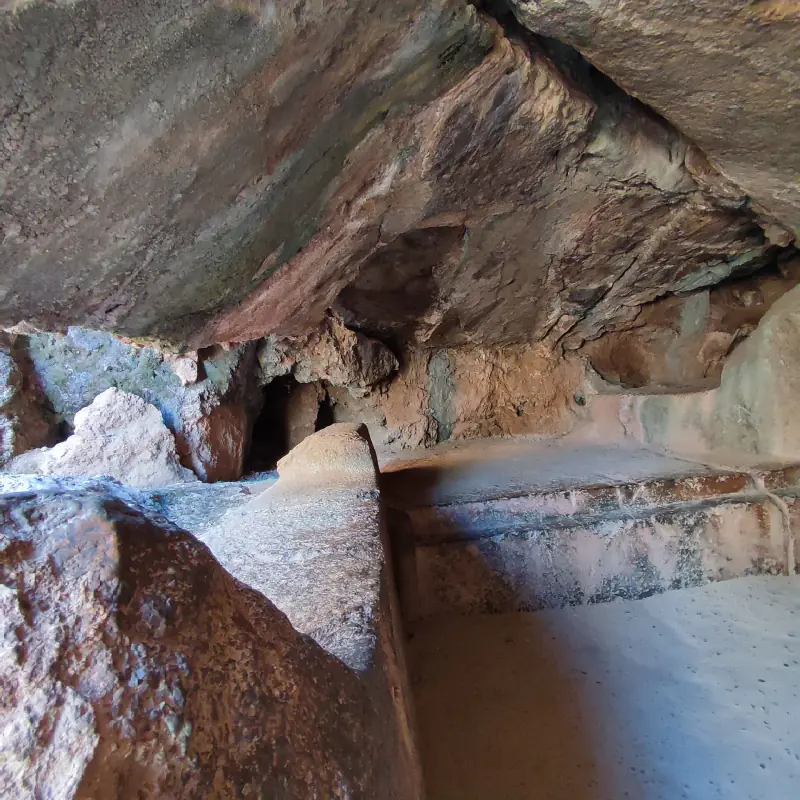
Most long caves are in limestone or dolomite, but other processes make caves as well. Lava tubes form when the surface of a lava flow hardens and the molten rock inside drains away. Sea caves are cut by waves. Caves also form in gypsum, salt, sandstone and quartzite, and people have dug underground spaces in chalk, salt and ore for thousands of years.
Many of Peru's famous archaeological 'caves', such as Guitarrero and Pikimachay, are rock shelters in volcanic or other rock. The Incas also carved chambers into limestone outcrops, as at Qenqo.
Why caves stay the same temperature
Rock is a good insulator. A few tens of metres from the entrance, the air in a cave settles at roughly the average annual temperature of the surface above it. Humidity is close to 100 per cent. This stable climate lets fragile mineral formations grow and lets specialised animals live without seasons.